Posts

Showing posts with the label Captive Power Plants

Captive Power Plants vs. Central Power Stations: Key Differences, Pros & Cons

Image
In today's rapidly evolving energy landscape, the decision between Captive Power Plants and Central Power Stations is crucial for industries, infrastructure planners, and policymakers. Each power generation method comes with its own set of benefits, limitations, and ideal applications. As a leading renewable energy company , we delve into the key differences, advantages, and drawbacks of both models to help you make an informed energy decision. What Are Captive Power Plants? Captive Power Plant (CPP) means an energy generation facility set up by industries for their onward consumption. These plants provide autonomy and reliability so that industries will not have to rely on grid-based power supply. Thermal, solar, wind, or a form of hybridization from all sources can act as captive plants to suit particular industrial needs. What Are Central Power Stations? Central Power Stations are power stations from where electricity is generated and then delivered to its consumers through t...
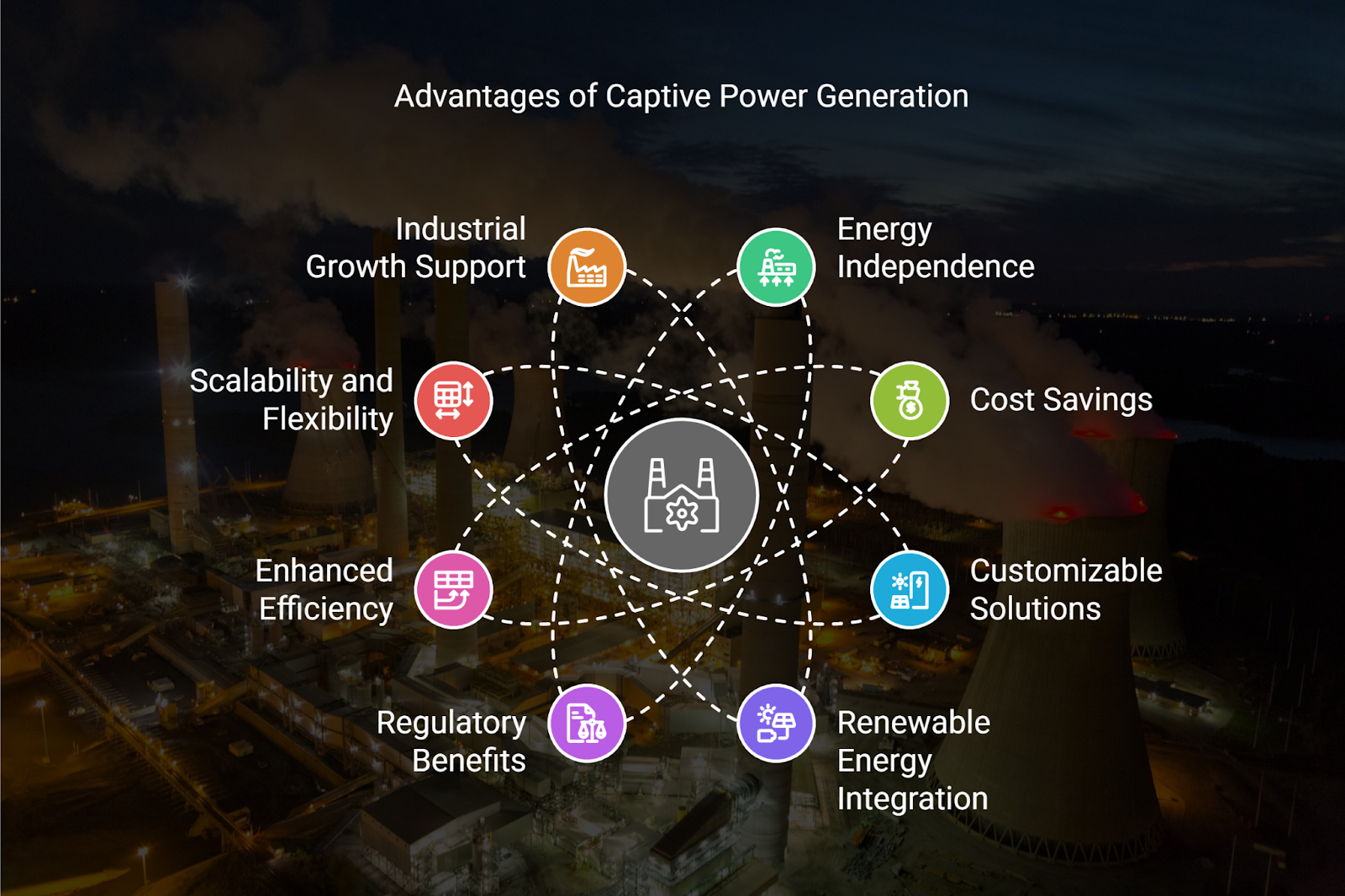
Top Advantages of Captive Power Plants for Industries

Image
  Having a power supply that is reliable and cost-effective is important in today's competitive industrial scenario. Captive Power Plants have emerged as a game-changing solution for industries seeking to achieve energy independence while reducing costs. A captive power plant is a power generation facility set up by an organization for meeting its own energy requirements. Read out blog on Top Advantages and Installation Process Of Captive Power Plants In Budget What is Captive Power Generation? Captive power generation is the process by which industries generate their own electricity for internal use, ensuring reliability and cost efficiency. It is different from grid power because it offers customized energy solutions, reduces dependence on external sources, and often incorporates renewable energy for sustainable operations. 1. Energy Independence and Reliability Total energy independence, The dependency of industries on grid power is no longer a concern, as they can no longer re...

The Science Behind Wind Turbines: How they convert wind into electricity

Image
  Wind Turbine is one of the most amazing inventions in the world that today is driving the world's shift to renewable energy. Utilizing the raw power of the wind, these machines harness advanced power to electrical transformations from kinetic energy. We are going to cover the details about just how wind turbines catch and convert wind to electricity, but also why it is so very important to select the right location for a wind power plant. Moreover, we'll also explore all about KP Energy Limited, the best wind power company in Gujarat, leading sustainable energy. Read our blog on How Wind Turbines Convert Wind into Electricity How Do Wind Turbines Work? A wind turbine operates on a simple principle: it captures the kinetic energy of the wind and converts it into mechanical energy, which is then transformed into electricity. Here’s a step-by-step breakdown: Capturing Wind Energy : The movement of the wind is the start of operation of a turbine. When the wind rushes through the...

What is the Difference Between Captive and Central Power Station?

Image
Electricity, the lifeblood of modern society, powers our homes, fuels industries, and propels technological advancements. Within this vast network, two primary sources stand out: Captive Power Plants (CPPs) and Central Power Stations (CPSs), each playing a critical role in electricity generation and distribution. The distinction between them is fundamental to how businesses and communities access and utilize electricity. 1. What are Captive Power Plants? Captive Power Plants (CPP) , also known as auto producers or embedded generation facilities, stand out as a beacon of self-reliance in the energy sector. They are privately owned setups designed to serve the electricity needs of the entity that owns them. Think of them as the personal powerhouses for industries or commercial sites, generating electricity exclusively for their own use. These power plants can operate either off-grid or be connected to the electric grid to exchange surplus power. Here's a closer look at their characte...